Dental implant or bridge: how to decide when a tooth is missing
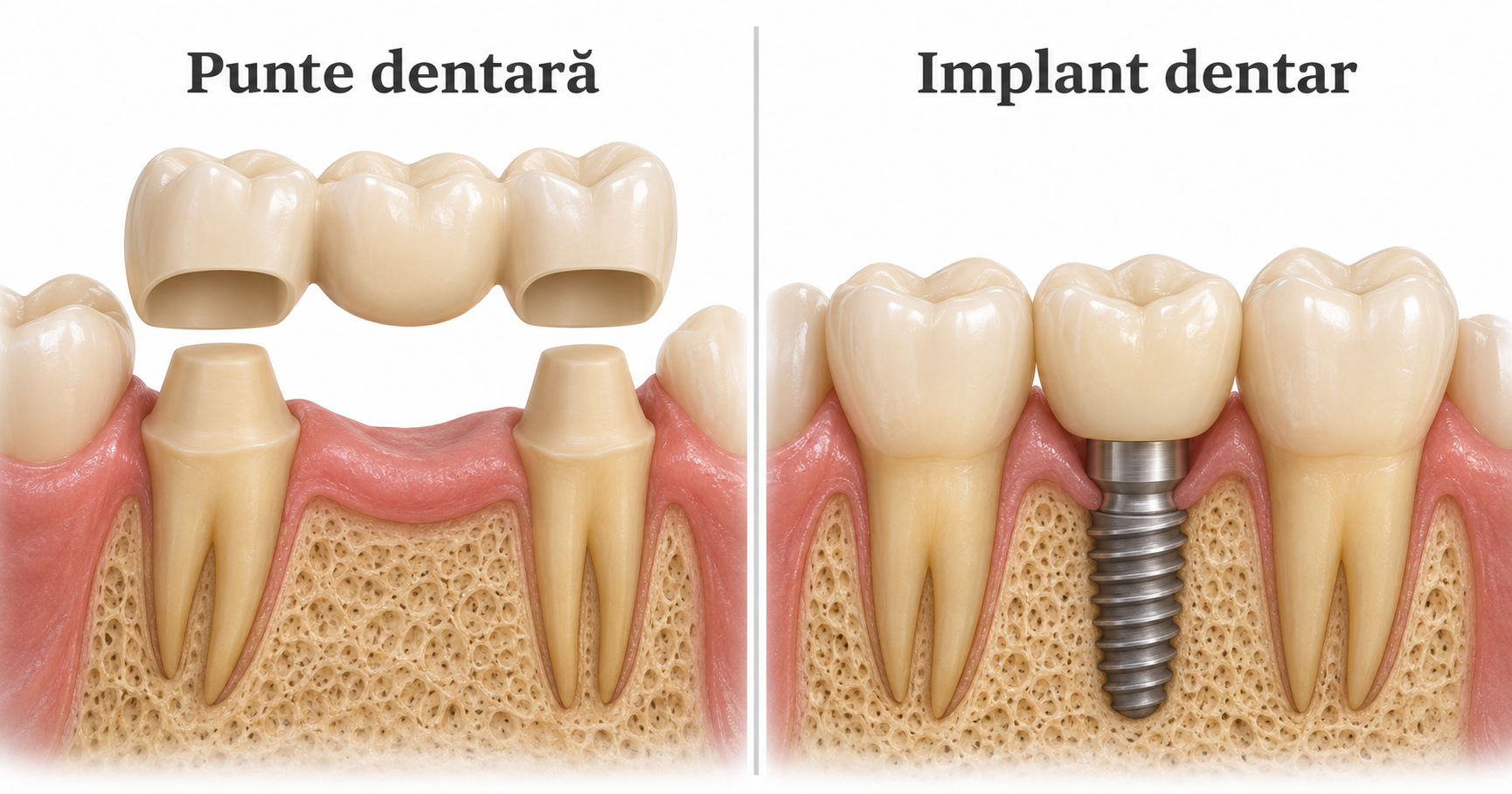
AI-generated illustration
A dental implant and a bridge can both replace a missing tooth. They are supported differently and involve different stages of treatment. The condition of adjacent teeth, available bone, gum health and how you will keep the restoration clean all help determine which option suits you.
How do implants and bridges differ?
An implant placed in the jawbone can support a crown without reshaping neighbouring teeth. A conventional bridge is supported by one or more neighbouring teeth that have been prepared for the restoration.
A resin-bonded bridge attaches to a neighbouring tooth with a bonded wing and requires less tooth preparation. It suits selected cases. Ask which type of bridge is being proposed.
The health of neighbouring teeth and gums
If neighbouring teeth are healthy and have no large restorations, preserving them matters. If they already have crowns or extensive fillings, there may be a stronger case for a bridge. The supporting teeth must be able to carry it.
When assessing an implant, the dentist checks your jawbone, gums and general health. Smoking and certain medical conditions can affect healing. The plan may change if a bone graft is needed or an existing condition needs treatment first.
How long until my final restoration?
An implant involves surgery and a healing period that can last months. Timing depends on conditions in your mouth and any additional procedures. A bridge involves different stages and can also require preparatory treatment.
Ask what you will have between visits and when you can use the final restoration. A useful estimate covers the whole course of treatment, including what happens beyond surgery or the appointment for impressions.
Considering day-to-day care
Both options need cleaning and check-ups. With a bridge, you need to clean underneath the replacement tooth. Around an implant, the health of the gum and surrounding bone needs monitoring.
Both can develop complications. With a bridge, a supporting tooth can develop problems or the bridge can come loose. With an implant, inflammation, damage to components or loss of the implant can occur.
Comparing treatment plans and costs
Ask for a written explanation of the full cost, including preparatory treatment, any temporary restoration, components and the final restoration. Ask what maintenance each option involves and what alternatives are available if one is unsuitable.
A removable denture may also be worth considering. The consultation should help you understand your realistic options and the trade-offs each involves.
You can read about dental implants and the restorative treatments available at the clinic. The choice depends on an assessment of your teeth, gums and bite.
This is general information. Your assessment and care recommendations will be tailored to you at your appointment.