Filling, inlay or crown: how do you choose a restoration?
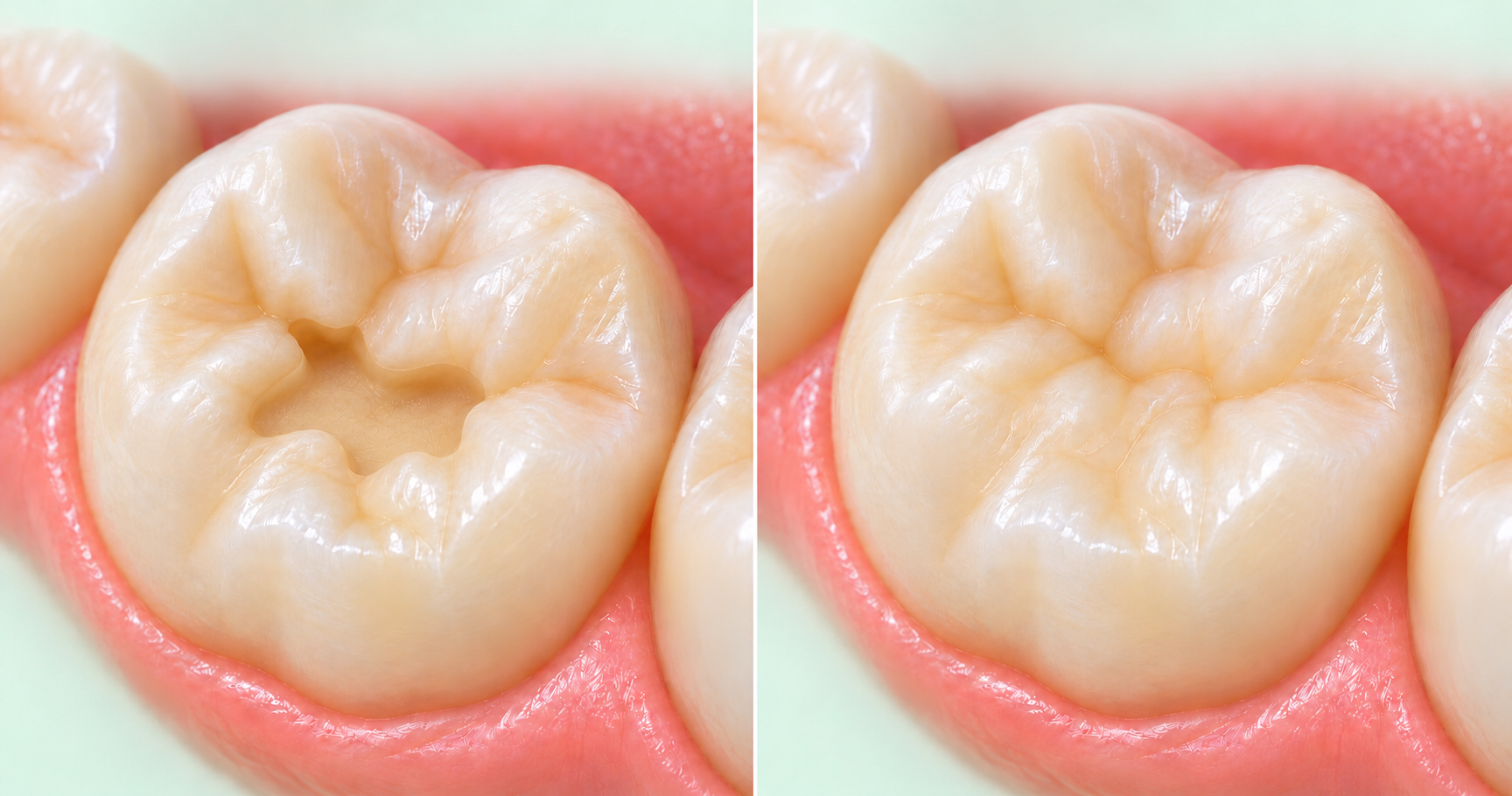
AI-generated illustration
A tooth damaged by decay or a fracture can be restored in several ways. A filling, inlay and crown differ in more than material or cost. Each replaces lost tissue and protects what remains in a different way. The aim is to restore shape and chewing function while preserving as much healthy tooth as possible.
A filling is made directly on the tooth
A filling can be made from composite, a material that closely matches the colour of the tooth. It can be used in front and back teeth, depending on how much tissue is missing and the forces on the tooth when you chew.
The dentist places and shapes the material directly on your tooth. To bond it properly, the area needs to stay clean and dry while the dentist works. If the remaining walls are weak or a large part of the tooth is missing, it may need a different type of protection.
An inlay or onlay is made to fit the damaged area
An inlay is made outside the mouth and bonded into the prepared tooth. It may be an option when a direct filling is unsuitable.
An onlay also covers one or more cusps, the raised points on the chewing surface. It can protect weakened areas while preserving other parts of the natural crown. Inlays and onlays differ from fillings both in how they are made and in how much of the tooth they cover.
Inlays and onlays can be made from different materials. The clinic offers E.max ceramic inlays and onlays.
A crown protects a more extensively damaged tooth
A dental crown covers the tooth after it has been prepared. It may be recommended when a large part of the tooth is missing or has been weakened by decay, cracks or extensive restorations.
Part of the tooth must be removed to make room for a crown, so there should be a clear reason for covering the whole tooth. A smaller defect may need a more conservative restoration. Even after root canal treatment, the best choice depends on how much tooth remains and the forces it bears when you bite.
What matters before choosing a material?
The dentist checks how much healthy tissue remains, the condition of the gums, any cracks and how the teeth meet. If needed, further investigations can help assess the root and surrounding tissues. Active problems should be addressed before the final restoration.
Composite, E.max ceramic and zirconia-based ceramic each have different uses. The location of the tooth, the space available, the appearance you want and the forces on the tooth when you chew help guide the choice.
What happens after the tooth is restored?
The restoration should let you use the tooth and keep the area clean. Brushing with fluoride toothpaste, cleaning between the teeth and regular check-ups are still important. A restored tooth can still develop decay or gum problems.
Restorations may wear or become damaged over time. How long they last depends on the condition of the tooth at the start, the material, daily cleaning and the forces on the restoration. The first step is choosing a restoration that suits that particular tooth.
You can read about treatment for tooth decay and dental crown to see the options available at the clinic. Your dentist will assess how much of your natural tooth can be preserved before recommending a plan.
This is general information. Your assessment and care recommendations will be tailored to you at your appointment.