Snoring in adults: how myofunctional therapy may help
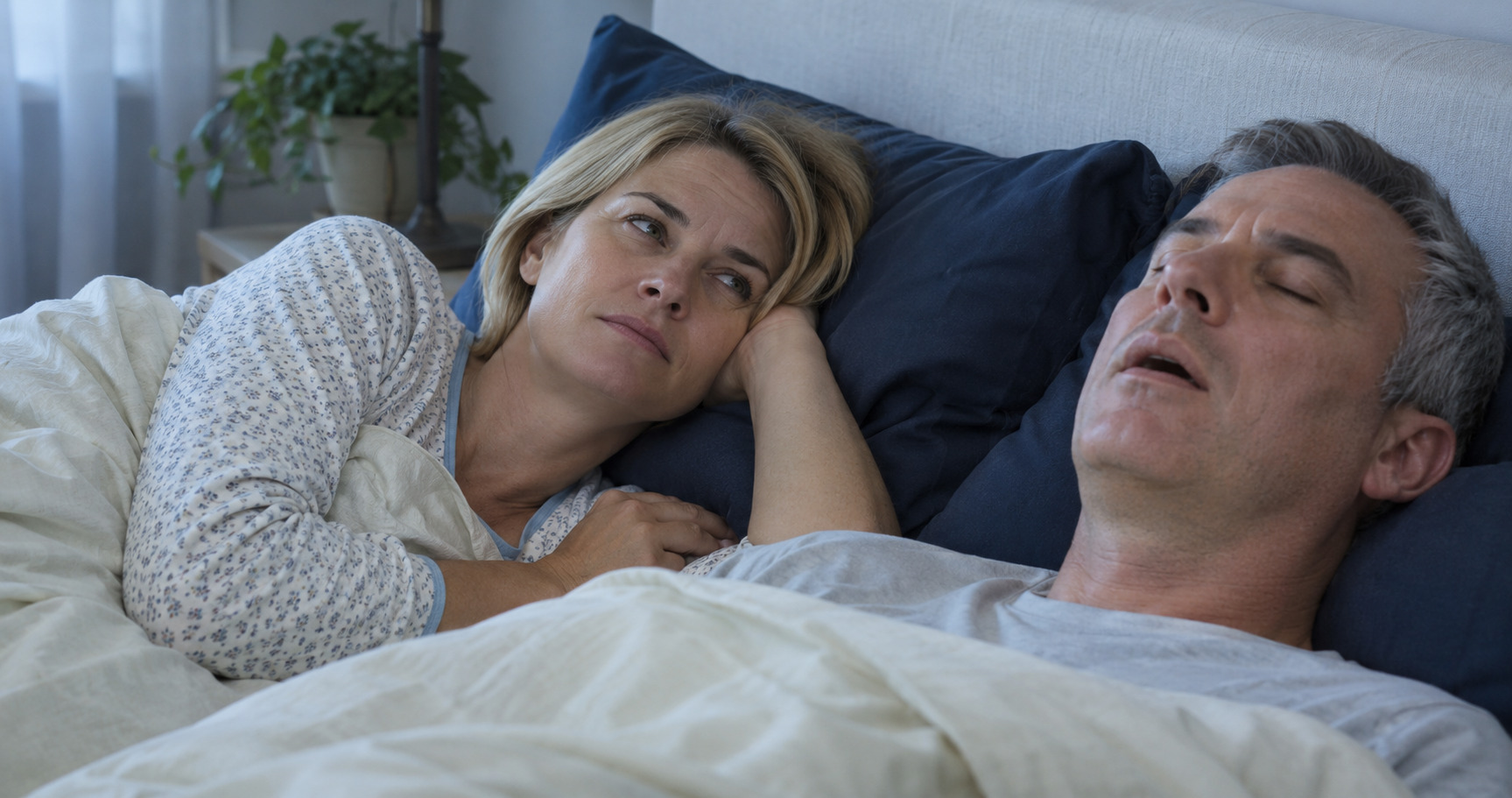
AI-generated illustration
Snoring can change how the whole family sleeps. The person who snores may sleep through it while their partner wakes repeatedly. If it happens often, it is worth finding out why and exploring suitable treatments. Myofunctional therapy may be part of the approach for some adults.
Why do we snore?
The sound comes from tissues vibrating in the upper airway during sleep. The space available for air to pass, how well you breathe through your nose and how the surrounding muscles work can all contribute. Two people who snore may therefore need different advice.
When does snoring call for a sleep assessment?
Snoring can occur on its own or alongside obstructive sleep apnoea, in which breathing repeatedly stops. Speak to a doctor if your partner notices pauses in your breathing, if you wake gasping or if you feel sleepy during the day. Mention it if you always wake tired, even after enough hours of sleep.
If sleep apnoea is suspected, the doctor may recommend a sleep study. A recording made on a phone may help with the discussion, but cannot establish a diagnosis. Quieter snoring alone does not show that breathing during sleep has returned to normal.
What is myofunctional therapy for snoring?
Orofacial myofunctional therapy uses guided exercises for the tongue, lips and muscles of the mouth and throat. The programme works on their function and coordination and is adapted to the findings of your assessment. No single set of exercises is suitable for everyone who snores.
Exercises need to be learned, practised and checked. The choice of exercises, how you do them and how consistently you practise all matter. At your appointment you can discuss the aim of the exercises and how progress will be assessed.
Can exercises reduce snoring?
A randomised clinical trial found a measurable reduction in snoring after three months of exercises for the mouth and throat. This suggests that some patients may benefit. Exercises do not stop snoring in everyone, and three months is not a standard treatment period for every patient.
Reviews of several studies report encouraging findings in adults but also significant limitations, including small groups, different exercise programmes and limited long-term follow-up. Benefits need to be assessed individually. If you have sleep apnoea, continue prescribed treatment, including CPAP, unless your sleep specialist reassesses it.
Exercises or an oral appliance?
These approaches work differently. Some oral appliances hold the lower jaw slightly forwards at night to help air pass. After assessment, one may be suitable in certain cases of snoring or sleep apnoea. Choosing an appliance involves examining the teeth, bite and jaw joints and arranging follow-up.
An off-the-shelf device cannot replace this assessment. For sleep apnoea, the sleep specialist is involved in deciding whether an appliance is appropriate and checking its effect. Exercises and oral appliances can have different roles in a treatment plan.
What will we discuss at the appointment?
Tell us when the snoring began, how often it happens and how you feel in the morning. Your partner’s observations are useful too. Bring reports from sleep studies or ENT consultations and details of any treatment already recommended.
During the myofunctional assessment, Dr Elena Păun examines how the muscles of your face and mouth work and discusses whether an exercise programme is appropriate. If further investigations are needed, they help guide the next steps. The aim is an individual plan with clear expectations and follow-up.
For an assessment and information about adult myofunctional therapy, you can book an appointment at Clinica Doctor Iorgulescu in Sector 1, Bucharest.
General information. Your clinician will make individual recommendations at your appointment.