Root canal treatment: when can a damaged tooth be saved?
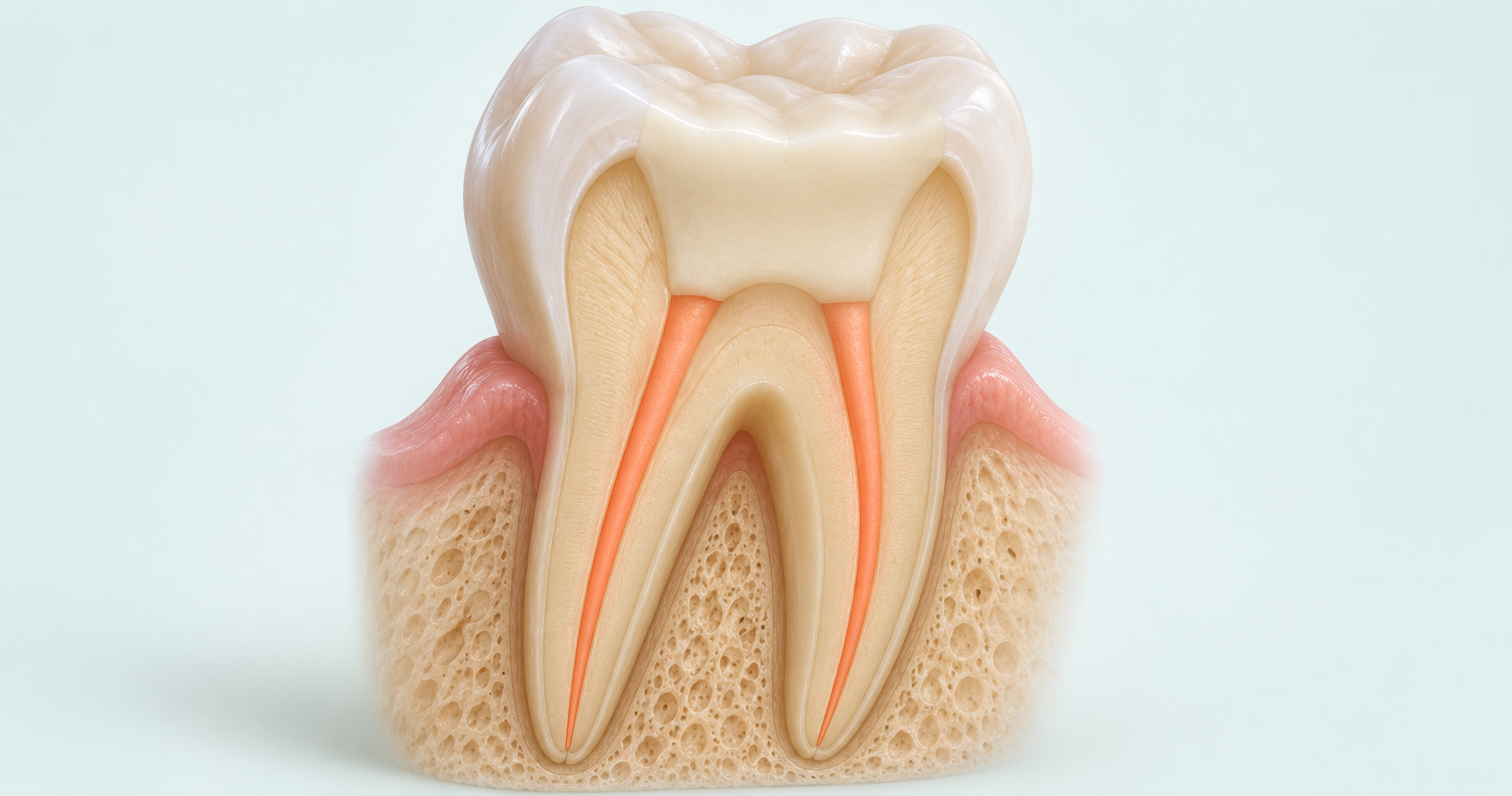
AI-generated illustration
Root canal treatment removes inflamed or infected tissue from inside a tooth so that, where possible, you can keep it. Both treating the canals and restoring the tooth matter for the way it works afterwards. The initial assessment helps establish whether it can be restored and what alternatives you have.
Which part of the tooth is treated?
Inside the tooth is the pulp, which contains nerves, blood vessels and connective tissue. Deep decay, a crack or an injury can cause it to become inflamed or infected. The dentist removes the affected tissue, cleans and disinfects the spaces inside the tooth, then fills and seals them.
The aim is to keep the tooth if possible. The severity of the pain alone cannot tell you whether it can be saved.
How does the dentist decide whether the tooth can be saved?
The dentist assesses the roots, how much sound tooth remains, any fractures and how well the bone supports the tooth. One important question is whether the tooth can be rebuilt to function properly after root canal treatment.
A severe root fracture, loss of much of the supporting bone or too little tooth to rebuild may change the recommendation. Ask about the likely outcome and the alternatives, including what would happen if the tooth had to be removed.
What happens at the appointments?
Root canal treatment is usually carried out under local anaesthetic. The dentist makes an opening into the tooth, cleans the canals and prepares them for sealing. It may take one or more appointments. A temporary filling can protect the tooth between visits.
Tell the dentist if you feel pain during treatment. You can agree on a signal for a break before you start. Ask what to expect afterwards and how to contact the clinic if you are concerned.
Why does the tooth need to be restored?
Once the canals have been treated, the tooth itself may still need a permanent filling or another restoration to protect it. The choice depends on where the tooth is and how much of its structure remains. Until then, follow your dentist's advice on chewing and protecting the area.
Ask for this stage to be included in the treatment plan and cost estimate. That way you know what comes after the root canal treatment and when the temporary filling will be replaced with the final restoration.
Antibiotics cannot replace treatment of the tooth
For many kinds of pain caused by the pulp or the tissues around the root, the priority is to treat the tooth itself. Your dentist may prescribe antibiotics when indicated, for example for certain infections that also make you feel generally unwell. Do not start taking them on your own.
The tooth may be tender for a while after treatment. Let your dentist know if the pain gets worse or swelling develops. Follow-up appointments allow the dentist to check how it is healing.
You can read more about the clinic's approach in our root canal treatment page.
This is general information. Your assessment and care recommendations will be tailored to you at your appointment.