Dental implants, step by step
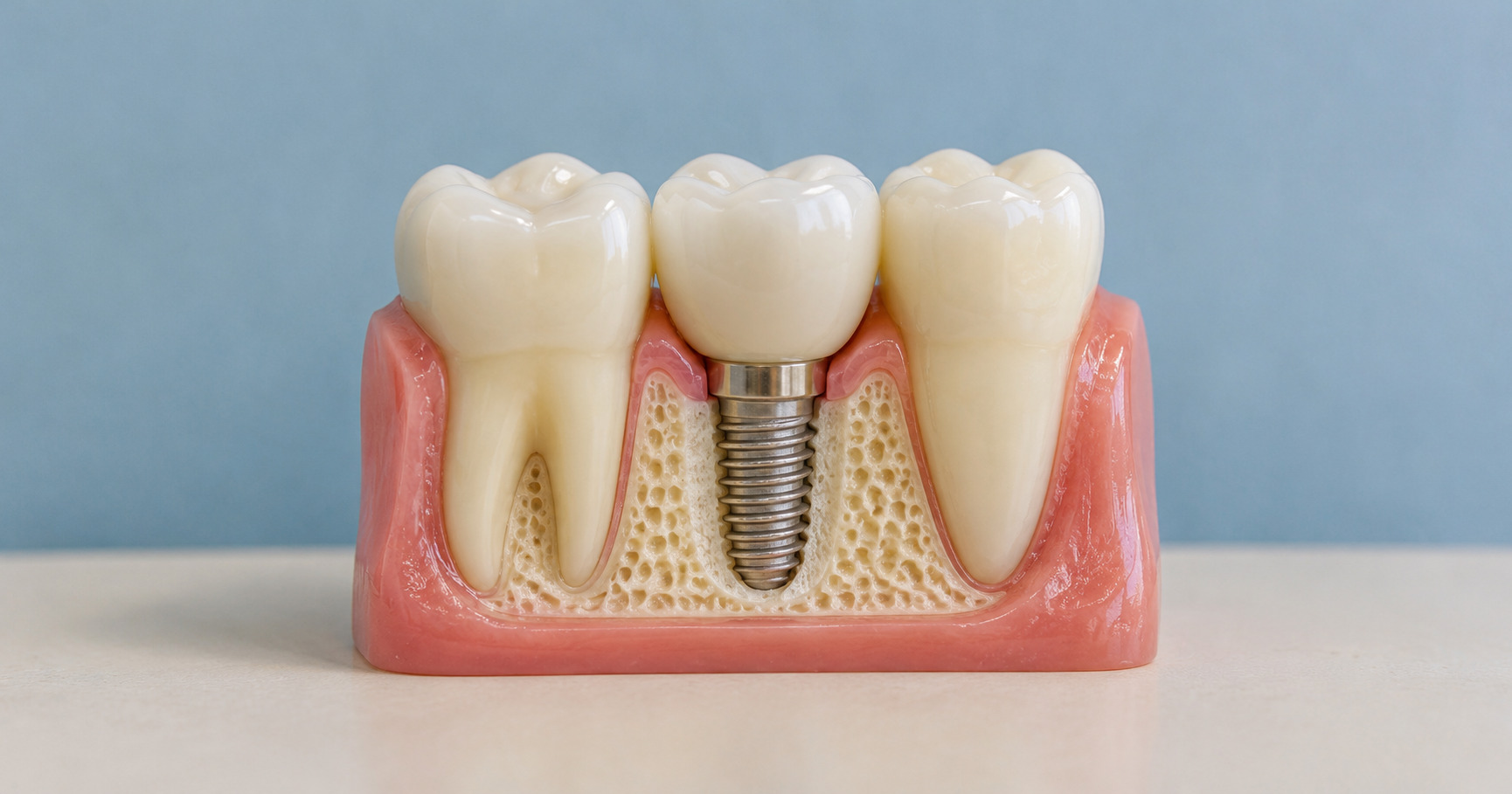
AI-generated illustration
A dental implant supports a crown that replaces a missing tooth. Treatment involves an assessment, implant placement, healing and making the final restoration. Here is what happens at each stage and what can affect the time it takes.
The implant and the crown
The implant sits in the jawbone and takes on the supporting role of a tooth root. A connector attaches it to the crown, the visible part shaped like a tooth. Implants can also support bridges and certain types of dentures. Your treatment plan should cover both surgery and the restoration that will be fitted later.
1. Your consultation and treatment options
Your dentist examines your teeth and gums and the area where teeth are missing. We ask about your health, medicines and whether you smoke because these can influence which treatment is suitable. We explain the alternatives, including a bridge or removable denture.
Your dentist selects the imaging you need. A three-dimensional cone beam CT (CBCT) scan can show the bone and nearby structures, helping to plan the position of both the implant and the final restoration.
At Clinica Doctor Iorgulescu, Dr Daniel Iorgulescu, PhD, plans treatment around the final teeth: how you will chew, how your smile will look and how easily you can keep the area clean. He has worked in implant dentistry since 1992, including complex reconstructions. One of the implant systems used at the clinic is Ankylos (Germany).
2. Preparing for implant surgery
Gum problems and other conditions that could affect treatment need to be assessed and managed. You may also need a bone graft. A small graft can sometimes be placed at the same time as the implant, while a larger one may need to heal first. This affects the timing of treatment.
3. Surgery and the first few days
Implants are usually placed under local anaesthetic. Pain, swelling and bruising can follow, and the degree varies. You will be given instructions on caring for the area, managing discomfort and when to contact your dentist. Recovery varies even when surgery has been carefully planned.
4. Healing and fitting the crown
The bone gradually bonds with the implant in a process called osseointegration. This can take several months. Three to six months is a guide for some cases, and the whole treatment may take longer. Extractions, bone grafting and making the final teeth can add time.
In selected cases a temporary restoration can be fitted straight away. Healing continues afterwards, before the final teeth are fitted. Your dentist assesses when the implant can support a restoration and under what conditions.
After healing, your dentist takes an impression to make the crown or other restoration in your plan. Several visits may be needed, including for temporary teeth and to check the shape before the final fitting. Timing depends on the complexity of the restoration and the health of the tissue around the implant.
How long does a dental implant last?
An implant can last for many years, but its lifespan varies. The crown you chew with can wear or chip over time. It may need repair or replacement even if the implant is still firmly anchored in the bone. At your check-ups, your dentist examines the crown, gum and bone around the implant.
5. Looking after your implant
Implants need regular cleaning and check-ups. Your dentist will recommend tools and a review schedule suited to you. Contact the clinic if the area hurts or the implant or restoration feels loose. Complications can include implant loss, so ongoing care is part of treatment.
Questions to ask at your first appointment
Ask for a plan showing the stages, estimated timing and costs of the implant, connecting components, temporary or final teeth and any other surgery. Ask what teeth you can have during healing and what alternatives are available if an implant is unsuitable.
To find out how a missing tooth is assessed, see our dental implant page . If you already have implants, our article on caring for your implants explains maintenance and peri-implantitis.
This is general information. Your treatment plan is based on the findings at your consultation.