Laser treatment for gum disease
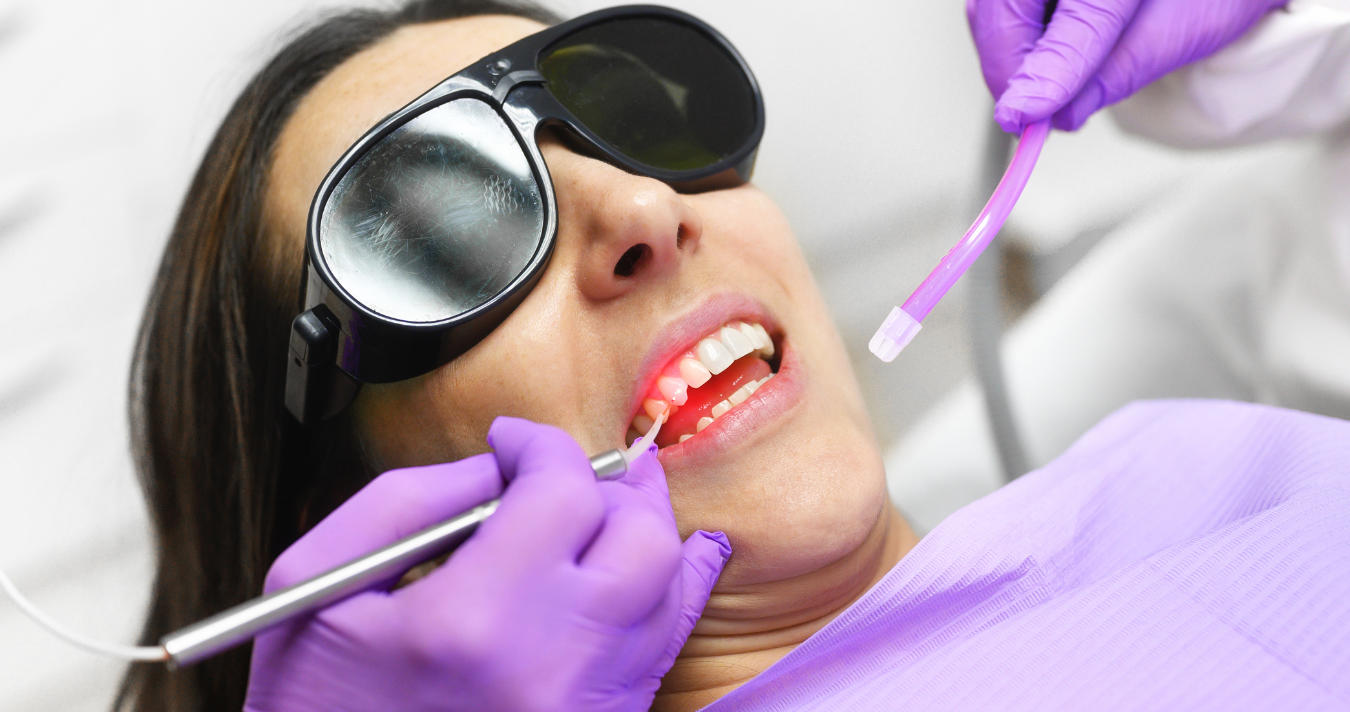
Laser therapy is the most effective way to stop gum disease, with minimal discomfort, an easy recovery and visible results from the first few sessions.
Periodontal disease , also called periodontitis, develops when bacteria in the mouth penetrate deep into the tissues around the bone and tooth roots and multiply unchecked, forming periodontal pockets.
Untreated periodontitis can cause the gums to pull away from the teeth, the gum line to recede and the supporting bone to break down. Eventually teeth may be lost. Research has also found associations between gum disease and conditions such as heart disease, diabetes and some cancers.
Conventional and laser-assisted treatment
Conventional treatment involves surgical removal of periodontal pockets and a course of antibiotics. This method is painful, causes discomfort and side effects, and has been shown to be ineffective in suppressing Aggregatibacter actinomycetemcomitans, the bacterium responsible for the aggressive nature of periodontal disease.
Laser treatment destroys bacteria in periodontal pockets. The laser beam reaches areas that are difficult to access, including the cementum covering the root and the deeper layers of soft tissue. This allows it to eliminate the pathogen even where conventional treatment has no effect.
Studies have also shown that conventional curettage does not remove all the infected tissue, making it harder for the tissue to regenerate. By comparison, repeated laser treatment leaves an even epithelial lining without remnants of granulation tissue, considerably shortening healing time.
What are the possible benefits of laser treatment for gum disease?
- This is a non-surgical approach, so it does not require incisions.
- In many mild cases, the procedure is painlessand does not require an anaesthetic.
- Results are visible from the first few sessions: bleeding stops, the gums return to a pink colour and sensitivity decreases. Bad breath clears up, moderately loose teeth may become steadier, periodontal pockets become shallower and discharge of pus stops.
- The results of treatment are much more stable over the longer term.
How is a laser used in periodontal treatment?
- The laser beam vaporises infected tissue below the gum line and inside periodontal pockets and eliminates inflammation in the tissues.
- The laser's antibacterial action eliminates disease-causing microorganisms deep in the tissues. These microorganisms are the main cause of the disease.
- Laser biostimulation promotes rapid recovery in the area affected by periodontitis.
- For very advanced disease that also needs conventional surgery, the procedure is laser-assisted. The laser eliminates bacteria deep in the tissues and promotes faster recovery with less postoperative pain.
Laser periodontal treatment, together with thorough oral hygiene and regular check-ups, is the only effective way to stop the disease and keep your natural teeth for as long as possible.
Signs that you may have gum disease
If you have noticed any of the symptoms below, see your dentist promptly for a diagnosis and a treatment plan. The earlier you begin treatment, the better the chances of recovery.
- Persistent bad breath
- Itching or discomfort in the gums
- Gums that bleed when you brush, while chewing or even on their own
- Red or purplish-red gums
- Gums that look swollen or puffy
- Receding gums that make the teeth look longer
- Sensitivity near the gum line where the gums have receded and the roots are exposed
- Teeth that start to feel loose
- Teeth that shift position
- New gaps between the teeth
- Teeth lost after becoming loose as the gums recede
Who is more likely to develop gum disease?
Factors that can increase the risk or make it harder to keep the gums healthy include
- A build-up of tartar that has not been removed
- Untreated tooth decay
- Older crowns that fit poorly at the gum line
- Crowded or crooked teeth that are difficult to clean at home
- Difficulty maintaining good oral hygiene
- Smoking and consumption of sugary drinks
- Diabetes or immune disorders
- A weakened immune system
- Stress and lack of sleep
- Hormonal changes, including those associated with pregnancy, puberty and menopause
Read about professional cleaning with a dental laser and its role in preventing gum disease
What can you do to help prevent gum disease?
- See your dentist regularly for check-ups. They will carry out scaling, preferably with a laser, and can detect decay at an early stage and treat it before complications arise.
- Ask your dentist to check whether your older crowns fit correctly at the gum line and have any that have shifted replaced. This removes places where bacteria can multiply.
- If crowded or crooked teeth are hard to clean, an orthodontic assessment can help you understand the options for straightening them.
- Cut down on smoking and sugary drinks as much as possible.
- Follow your dentist's advice on cleaning your teeth and gums.
To book an appointment, call +40 774 678 223

Consultant Oral and Maxillofacial Surgeon · Associate Professor of Oral Implantology
Dr Daniel Iorgulescu, PhD
Dr Iorgulescu was among the early practitioners of implant dentistry in Romania and has taught and mentored generations of dentists. He provides dental implants, other oral and maxillofacial surgery, and laser treatments in facial aesthetics.

Specialist in general dentistry
Dr Mihai Iorgulescu
Dr Mihai Iorgulescu has a particular interest in dental technology. He takes a meticulous approach to laser-assisted dental treatment and to restorations using modern materials.