Oral appliances for snoring: when they help and how they differ from night guards for grinding
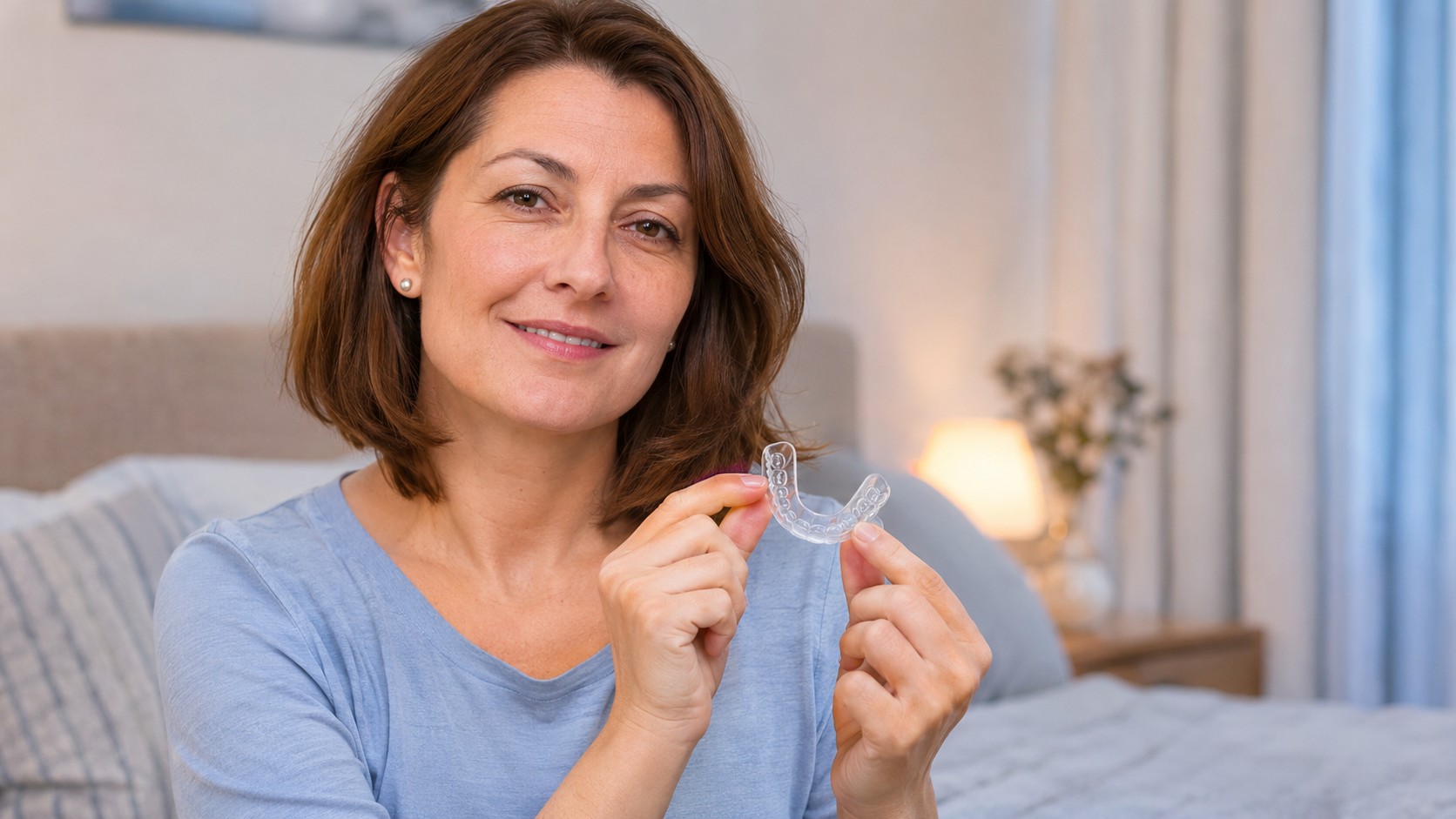
AI-generated illustration
Snoring can disturb the whole family’s sleep. When looking for a solution you may come across an oral appliance or “mouth guard”. These terms cover devices with different purposes. The first question is what the appliance is meant to treat.
How does an oral appliance for snoring work?
A mandibular advancement device holds the lower jaw slightly forward during sleep. For suitable patients this can help keep the airway open and reduce snoring. The position is set and adjusted individually. Moving the jaw further forward does not necessarily give a better result.
A night guard for bruxism mainly protects the teeth from clenching and grinding. Covering the teeth does not make it a treatment for snoring or sleep apnoea. If you already have a guard, bring it so we can check what it is designed to do.
First, find out what happens during sleep
Not everyone who snores has sleep apnoea, but the two can occur together. Tell your doctor if your partner notices pauses in breathing, if you wake up gasping or if you feel sleepy during the day. Before starting treatment, it is important to distinguish snoring alone from obstructive sleep apnoea. Your doctor will decide which sleep test is appropriate. A questionnaire or an audio recording alone cannot establish the difference.
An oral appliance may be appropriate for some people with obstructive sleep apnoea, including those unable to tolerate CPAP or who prefer a medically suitable alternative. CPAP uses a mask to deliver pressurised air that keeps the airway open. Discuss the choice with your sleep specialist. Continue your prescribed treatment unless that clinician advises a change.
Why have a dental assessment?
Your dentist checks your teeth, gums, existing restorations, bite and jaw joints. This helps establish whether an appliance suits you and what needs attention before fitting. For obstructive sleep apnoea, guidelines recommend a custom-made adjustable appliance in preference to an off-the-shelf model.
Once made, the appliance is fitted and adjusted gradually under your dentist’s guidance. You may notice increased saliva, sensitive teeth or sore muscles. If these persist or bother you, tell your dentist. Avoid forcing the appliance into place or adjusting it yourself. A photograph or another person’s experience cannot tell you how well a device will fit you.
How will we know if it works?
Reviews cover sleep, comfort, the condition of your teeth and any changes to your bite. Tell the dentist if pain persists, if pressure is uncomfortable or if your teeth meet differently.
In sleep apnoea, quieter snoring does not prove that breathing has returned to normal. Your doctor may recommend repeating the sleep test while you wear the appliance. Myofunctional exercises can have a separate role when appropriate.
What should I bring to the appointment?
Bring sleep study results, any recommendations and any device you already use. Note your concerns and what your partner has observed. At Clinica Doctor Iorgulescu in Sector 1, Bucharest, you can discuss a myofunctional assessment and the next steps for a recommendation tailored to you.